What Does Ethical Mean in Context of Designer Babies
C omfortably seated in the fertility dispensary with Vivaldi playing softly in the background, yous and your partner are brought coffee and a binder. Inside the binder is an embryo carte. Each embryo has a description, something like this:
Embryo 78 – male person
No serious early onset diseases, but a carrier for phenylketonuria (a metabolic malfunction that can crusade behavioural and mental disorders. Carriers just accept one copy of the factor, and then don't get the condition themselves).
Higher than boilerplate risk of type 2 diabetes and colon cancer.
Lower than average risk of asthma and autism.
Dark eyes, low-cal dark-brown hair, male pattern baldness.
forty% gamble of coming in the top half in SAT tests.
There are 200 of these embryos to choose from, all made by in vitro fertilisation (IVF) from you and your partner'south eggs and sperm. So, over to you. Which volition you choose?
If there's whatever kind of future for "designer babies", it might await something like this. It's a long way from the image conjured up when artificial conception, and mayhap even artificial gestation, were beginning mooted as a serious scientific possibility. Inspired past predictions nigh the futurity of reproductive technology by the biologists JBS Haldane and Julian Huxley in the 1920s, Huxley's brother Aldous wrote a satirical novel about information technology.
That book was, of course, Brave New World, published in 1932. Set in the year 2540, it describes a order whose population is grown in vats in an impersonal central hatchery, graded into five tiers of different intelligence by chemical treatment of the embryos. There are no parents as such – families are considered obscene. Instead, the gestating fetuses and babies are tended past workers in white overalls, "their hands gloved with a stake corpse‑coloured rubber", nether white, expressionless lights.
Brave New Globe has become the inevitable reference point for all media discussion of new advances in reproductive technology. Whether it'south Newsweek reporting in 1978 on the birth of Louise Brown, the first "examination-tube baby" (the inaccurate phrase speaks volumes) as a "weep circular the brave new world", or the New York Times announcing "The brave new earth of three-parent IVF" in 2014, the bulletin is that nosotros are heading towards Huxley'due south hatchery with its racks of tailor-fabricated babies in their "numbered exam tubes".
The spectre of a harsh, impersonal and authoritarian dystopia ever looms in these discussions of reproductive control and selection. Novelist Kazuo Ishiguro, whose 2005 novel, Never Permit Me Go, described children produced and reared as organ donors, last month warned that thanks to advances in cistron editing, "we're coming close to the point where we can, objectively in some sense, create people who are superior to others".
But the prospect of genetic portraits of IVF embryos paints a rather different picture. If it happens at all, the aim volition exist non to engineer societies but to attract consumers. Should we allow that? Even if we practise, would a listing of dozens or even hundreds of embryos with diverse yet sketchy genetic endowments be of any use to anyone?
The shadow of Frankenstein's monster haunted the fraught discussion of IVF in the 1970s and 80s, and the misleading term "three-parent baby" to refer to embryos fabricated by the technique of mitochondrial transfer – moving healthy versions of the energy-generating prison cell compartments called mitochondria from a donor jail cell to an egg with faulty, potentially fatal versions – insinuates that at that place must be something "unnatural" about the procedure.
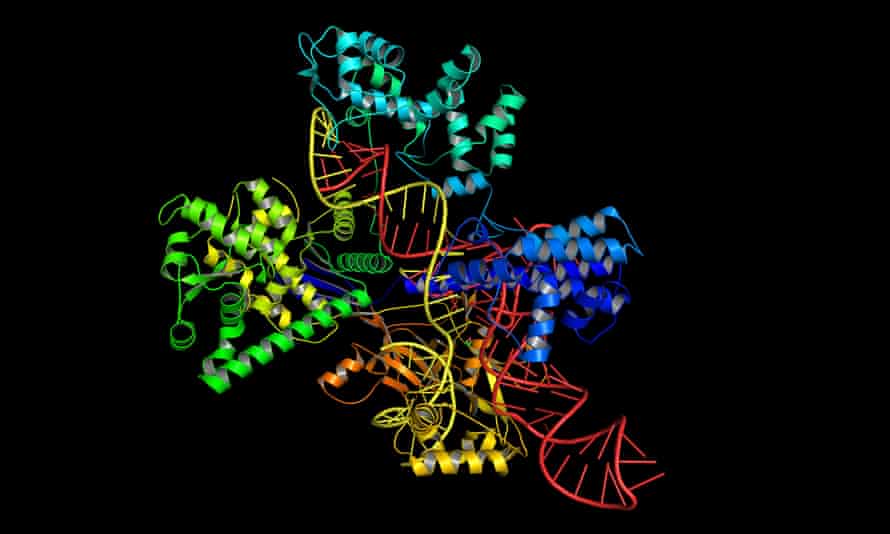
Every new advance puts a fresh spark of life into Huxley's monstrous vision. Ishiguro's dire forecast was spurred by the factor-editing method called Crispr-Cas9, developed in 2012, which uses natural enzymes to target and snip genes with pinpoint accuracy. Thanks to Crispr-Cas9, it seems likely that factor therapies – eliminating mutant genes that cause some severe, by and large very rare diseases – might finally bear fruit, if they can exist shown to be rubber for homo utilize. Clinical trials are now under way.
But modified babies? Crispr-Cas9 has already been used to genetically modify (nonviable) human embryos in China, to run into if information technology is possible in principle – the results were mixed. And Kathy Niakan of the Francis Crick Institute in the UK has been granted a licence past the Human Fertilisation and Embryology Authority (HFEA) to apply Crispr-Cas9 on embryos a few days old to find out more than about bug in these early stages of development that can lead to miscarriage and other reproductive problems.
Most countries accept not all the same legislated on genetic modification in homo reproduction, but of those that have, all take banned it. The idea of using Crispr-Cas9 for homo reproduction is largely rejected in principle by the medical research customs. A squad of scientists warned in Nature less than two years agone that genetic manipulation of the germ line (sperm and egg cells) past methods like Crispr-Cas9, even if focused initially on improving wellness, "could start us downwardly a path towards non-therapeutic genetic enhancement".
Besides, there seems to be petty need for cistron editing in reproduction. It would be a hard, expensive and uncertain way to accomplish what tin by and large be achieved already in other ways, especially by just selecting an embryo that has or lacks the gene in question. "About everything y'all can accomplish past gene editing, yous can accomplish by embryo selection," says bioethicist Henry Greely of Stanford University in California.
Because of unknown wellness risks and widespread public distrust of gene editing, bioethicist Ronald Light-green of Dartmouth College in New Hampshire says he does not foresee widespread use of Crispr-Cas9 in the next two decades, fifty-fifty for the prevention of genetic illness, let alone for designer babies. However, Light-green does see gene editing appearing on the menu eventually, and perchance not merely for medical therapies. "It is unavoidably in our future," he says, "and I believe that it will go one of the key foci of our social debates afterward in this century and in the century beyond." He warns that this might exist accompanied by "serious errors and health problems as unknown genetic side effects in 'edited' children and populations begin to manifest themselves".
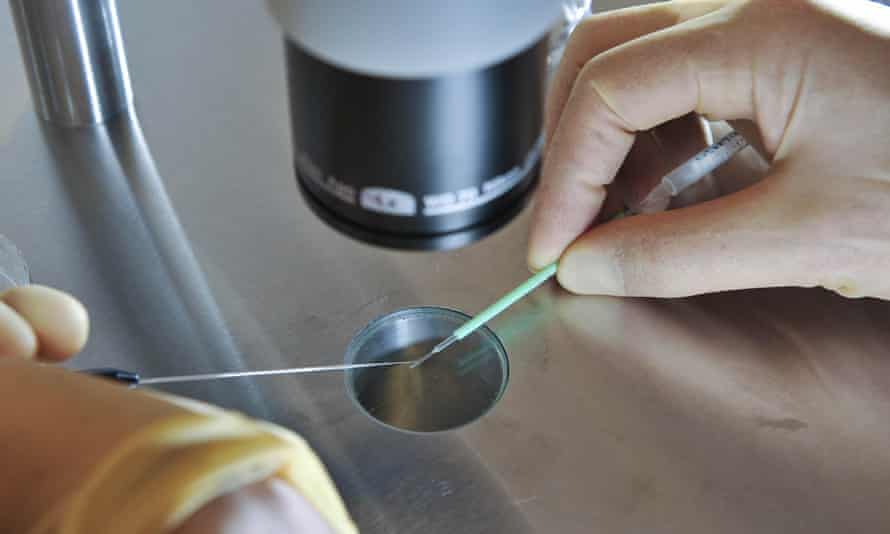
For now, though, if in that location's going to be annihilation even vaguely resembling the popular designer-baby fantasy, Greely says it will come from embryo selection, non genetic manipulation. Embryos produced by IVF will be genetically screened – parts or all of their Deoxyribonucleic acid will exist read to deduce which gene variants they carry – and the prospective parents will be able to choose which embryos to implant in the hope of achieving a pregnancy. Greely foresees that new methods of harvesting or producing human eggs, along with advances in preimplantation genetic diagnosis (PGD) of IVF embryos, will make choice much more than viable and highly-seasoned, and thus more common, in 20 years' time.
PGD is already used by couples who know that they conduct genes for specific inherited diseases so that they can identify embryos that do not have those genes. The testing, generally on iii- to 5-day-old embryos, is conducted in around 5% of IVF cycles in the US. In the UK it is performed under licence from the HFEA, which permits screening for effectually 250 diseases including thalassemia, early on-onset Alzheimer's and cystic fibrosis.
As a manner of "designing" your infant, PGD is currently unattractive. "Egg harvesting is unpleasant and risky and doesn't give you that many eggs," says Greely, and the success charge per unit for implanted embryos is still typically about i in iii. Merely that will change, he says, cheers to developments that will make human eggs much more arable and conveniently available, coupled to the possibility of screening their genomes quickly and cheaply.

Advances in methods for reading the genetic code recorded in our chromosomes are going to brand it a routine possibility for every ane of u.s. – certainly, every newborn child – to take our genes sequenced. "In the side by side 10 years or so, the chances are that many people in rich countries will have big chunks of their genetic information in their electronic medical records," says Greely.
But using genetic information to predict what kind of person an embryo would become is far more complicated than is often implied. Seeking to justify unquestionably important research on the genetic ground of homo health, researchers haven't done much to dispel simplistic ideas nigh how genes make u.s.a.. Talk of "IQ genes", "gay genes" and "musical genes" has led to a widespread perception that at that place is a straightforward 1-to-ane human relationship between our genes and our traits. In full general, it's anything simply.
There are thousands of mostly rare and nasty genetic diseases that can exist pinpointed to a specific gene mutation. About more mutual diseases or medical predispositions – for example, diabetes, heart disease or certain types of cancer – are linked to several or even many genes, can't be predicted with whatever certainty, and depend too on environmental factors such equally diet.
When it comes to more complex things like personality and intelligence, we know very little. Even if they are strongly inheritable – it's estimated that upwardly to 80% of intelligence, as measured by IQ, is inherited – we don't know much at all about which genes are involved, and not for want of looking.
At best, Greely says, PGD might tell a prospective parent things like "in that location's a 60% chance of this child getting in the top one-half at school, or a thirteen% run a risk of being in the superlative 10%". That's not much use.
Nosotros might do better for "cosmetic" traits such as hair or heart color. Even these "plough out to exist more complicated than a lot of people thought," Greely says, but as the number of people whose genomes take been sequenced increases, the predictive ability will improve substantially.
Ewan Birney, managing director of the European Bioinformatics Institute near Cambridge, points out that, even if other countries don't choose to constrain and regulate PGD in the way the HFEA does in the Britain, information technology will be very far from a crystal ball.
Nearly anything you can measure for humans, he says, can be studied through genetics, and analysing the statistics for huge numbers of people often reveals some genetic component. Only that information "is not very predictive on an individual basis," says Birney. "I've had my genome sequenced on the cheap, and information technology doesn't tell me very much. Nosotros've got to get away from the idea that your Dna is your destiny."
If the genetic basis of attributes like intelligence and musicality is likewise thinly spread and unclear to make option practical, and then tweaking by genetic manipulation certainly seems off the card too. "I don't think we are going to meet superman or a split in the species any fourth dimension shortly," says Greely, "because we simply don't know enough and are unlikely to for a long time – or perhaps for ever."
If this is all "designer babies" could hateful even in principle – freedom from some specific but rare diseases, noesis of rather trivial aspects of advent, only just vague, probabilistic information near more general traits like health, attractiveness and intelligence – will people go for it in large plenty numbers to sustain an industry?
Greely suspects, even if it is used at offset just to avoid serious genetic diseases, we need to start thinking hard most the options we might be faced with. "Choices volition be fabricated," he says, "and if informed people do not participate in making those choices, ignorant people will make them."
Dark-green thinks that technological advances could brand "design" increasingly versatile. In the next twoscore-fifty years, he says, "we'll start seeing the use of factor editing and reproductive technologies for enhancement: blond hair and blueish eyes, improved able-bodied abilities, enhanced reading skills or numeracy, and and so on."
He's less optimistic about the consequences, maxim that nosotros will then see social tensions "every bit the well-to-practice exploit technologies that make them even better off", increasing the relatively worsened health status of the world's poor. As Greely points out, a perfectly feasible x-twenty% improvement in health via PGD, added to the comparable advantage that wealth already brings, could atomic number 82 to a widening of the health gap between rich and poor, both within a lodge and betwixt nations.
Others dubiety that there volition exist any great demand for embryo selection, especially if genetic forecasts remain sketchy nearly the most desirable traits. "Where there is a serious problem, such equally a deadly condition, or an existing obstruction, such as infertility, I would not be surprised to run into people accept advantage of technologies such as embryo selection," says law professor and bioethicist R Alta Charo of the University of Wisconsin. "But nosotros already have evidence that people do non flock to technologies when they can conceive without assistance."
The poor have-up of sperm banks offering "superior" sperm, she says, already shows that. For well-nigh women, "the emotional significance of reproduction outweighs whatsoever notion of 'optimisation'". Charo feels that "our ability to dearest 1 another with all our imperfections and foibles outweighs any notion of 'improving' our children through genetics".
Withal, societies are going to face tough choices well-nigh how to regulate an industry that offers PGD with an e'er-widening scope. "Technologies are very amoral," says Birney. "Societies take to decide how to utilise them" – and different societies will make dissimilar choices.
Ane of the easiest things to screen for is sex. Gender-specific abortion is formally forbidden in about countries, although it nonetheless happens in places such equally China and India where there has been a strong cultural preference for boys. Simply prohibiting option by gender is another matter. How could information technology even exist implemented and policed? By creating some kind of quota system?
And what would selection against genetic disabilities do to those people who take them? "They accept a lot to be worried about here," says Greely. "In terms of whether social club thinks I should have been built-in, but also in terms of how much medical research in that location is into diseases, how well understood it is for practitioners and how much social support there is."
One time selection across avoidance of genetic affliction becomes an option – and it does seem likely – the upstanding and legal aspects are a minefield. When is it proper for governments to coerce people into, or prohibit them from, detail choices, such every bit non selecting for a disability? How can one balance individual freedoms and social consequences?
"The most important consideration for me," says Charo, "is to be clear virtually the distinct roles of personal morality, by which individuals decide whether to seek out technological help, versus the part of authorities, which tin prohibit, regulate or promote engineering."
She adds: "As well frequently we discuss these technologies as if personal morality or particular religious views are a sufficient basis for governmental activeness. But one must ground government action in a stronger set of concerns nearly promoting the wellbeing of all individuals while permitting the widest range of personal liberty of censor and choice."
"For better or worse, man beings will not forgo the opportunity to accept their evolution into their own hands," says Green. "Volition that brand our lives happier and improve? I'yard far from sure."
Easy pickings: the hereafter of designer babies
The simplest and surest fashion to "pattern" a baby is non to construct its genome by pick'northward'mix gene editing but to produce a huge number of embryos and read their genomes to find the one that most closely matches your desires.
Two technological advances are needed for this to happen, says bioethicist Henry Greely of Stanford University in California. The production of embryos for IVF must become easier, more abundant and less unpleasant. And gene sequencing must be fast and inexpensive plenty to reveal the traits an embryo will accept. Put them together and you accept "Easy PGD" (preimplantation genetic diagnosis): a cheap and painless style of generating large numbers of human embryos and and so screening their unabridged genomes for desired characteristics.
"To get much broader use of PGD, you need a improve way to get eggs," Greely says. "The more eggs you lot can get, the more bonny PGD becomes." One possibility is a one-off medical intervention that extracts a piece of a woman'due south ovary and freezes it for future ripening and harvesting of eggs. Information technology sounds drastic, merely would not be much worse than electric current egg-extraction and embryo-implantation methods. And information technology could requite admission to thousands of eggs for future employ.
An fifty-fifty more dramatic arroyo would exist to grow eggs from stem cells – the cells from which all other tissue types tin be derived. Some stalk cells are present in umbilical blood, which could be harvested at a person'south birth and frozen for later utilize to abound organs – or eggs.
Even mature cells that take advanced across the stalk-cell stage and become specific tissue types tin can be returned to a stalk-cell-similar state by treating them with biological molecules called growth factors. Last October, a team in Nihon reported that they had fabricated mouse eggs this way from skin cells, and fertilised them to create manifestly salubrious and fertile mouse pups.
Thanks to technological advances, the cost of human whole-genome sequencing has plummeted. In 2009 information technology cost around $50,000; today it is most similar $one,500, which is why several private companies can at present offer this service. In a few decades it could cost just a few dollars per genome. Then information technology becomes viable to retrieve of PGD for hundreds of embryos at a fourth dimension.
"The scientific discipline for safe and constructive Easy PGD is likely to exist some time in the side by side 20 to 40 years," says Greely. He thinks it volition then become common for children to be conceived through IVF using selected genomes. He forecasts that this volition pb to "the coming obsolescence of sex" for procreation.
Source: https://www.theguardian.com/science/2017/jan/08/designer-babies-ethical-horror-waiting-to-happen
0 Response to "What Does Ethical Mean in Context of Designer Babies"
Post a Comment